Source Portable Shredder for Recycling, Scrap Metal, and Plastic
Find 30 portable shredder options for recycling, scrap metal processing, and plastic waste management. Compare specifications including power, capacity, and certifications to identify suitable industrial solutions for your material handling needs.
Key considerations
Products List


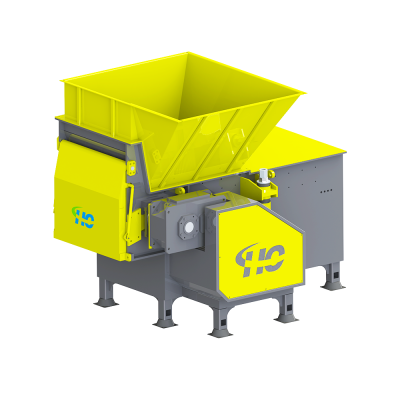


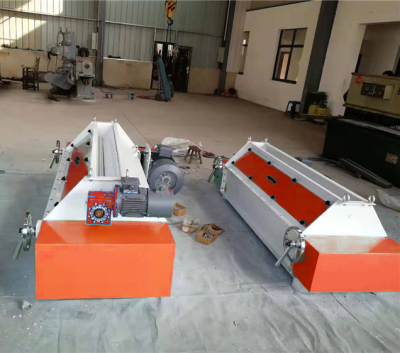


Comprehensive Sourcing Guide
Portable Shredder Sourcing Guide
The portable shredder market presents a diverse range of machinery designed for efficient material reduction, with observed listings indicating a significant price variance from $20 to $200,000 USD. This broad spectrum reflects the distinction between handheld units suitable for light-duty tasks and heavy-duty stationary industrial shredders capable of processing scrap metal. Buyers must carefully distinguish between these categories, as the operational requirements for a handheld device differ fundamentally from those of a large-scale recycling plant machine. The observed minimum order quantities (MOQ) typically range from 1 to 10 units, suggesting that suppliers are flexible enough to accommodate both pilot testing and initial bulk procurement without requiring massive upfront commitments.
Procurement decisions for these machines hinge on matching the specific shredding capability to the intended application, whether it involves recycling operations, metal scrap crushing, or general waste management. The data indicates that while some units are marketed as "handheld" with high cut speeds exceeding 3000mm per minute, others are robust stationary systems with capacities reaching up to 1000kg per hour. Understanding this dichotomy is critical for buyers, as selecting a machine with insufficient power or capacity for the target material can lead to operational bottlenecks, while over-specifying can result in unnecessary capital expenditure. The availability of customization options further complicates the selection process, requiring a clear definition of the required output mesh size and feed mode before engaging with suppliers.
Product Scope and Observed Listing Signals
The product scope for portable shredders encompasses a wide array of configurations, ranging from compact, semi-automatic units to fully automatic industrial systems. Listings reveal specific attributes such as a 410x240mm grinder chamber and rotary cutter counts of 12, which are indicative of machines designed for high-volume throughput in recycling environments. Conversely, other entries highlight handheld capabilities with cut effects of 4mm by 50mm and noise levels under 60db, catering to applications where portability and operator comfort are paramount. Buyers should scrutinize the "Type" and "Function" fields in product descriptions to ensure the machine is explicitly designed for the material in question, such as scrap metal or general plastic, rather than assuming a universal shredding capability.
Listing signals also provide insight into the physical and logistical characteristics of the equipment, including weight, dimensions, and packaging standards. Observed data points to heavy-duty units weighing up to 5 tons with dimensions around 980x810x1260x985mm, necessitating specialized shipping arrangements and robust wooden case packaging. In contrast, lighter models weighing approximately 3500kg are available with plywood cases, offering more flexibility for transport. The "Packaging Details" often specify fumigation-free wooden boxes or custom requests, which is a vital consideration for international buyers concerned with import regulations and environmental compliance. These physical attributes directly influence the total landed cost and the infrastructure required at the destination site.
Technical Specifications to Verify
Technical verification begins with the power and voltage requirements, which vary significantly across the observed product range. Some units operate on 220/380V with a power rating of 7.5kw or 10HP, while others are specified at 380V with 37W, indicating a potential discrepancy in the listing data or a distinction between motor power and auxiliary systems. Buyers must confirm the exact voltage and frequency compatibility with their local grid to prevent equipment damage or operational failure. Additionally, the feed mode, whether automatic or semi-automatic, dictates the level of operator intervention required and the overall efficiency of the shredding process, making it a critical specification to validate against production needs.
The mechanical specifications, including cutter configuration and mesh size, are equally vital for ensuring the output meets quality standards. The presence of stationary and rotary cutters, such as 2 stationary and 12 rotary cutters, suggests a specific grinding mechanism that should be cross-referenced with the desired mesh size, observed here as 8mm for certain models. For applications requiring finer or coarser outputs, the "Cut Effect" and "Shredding Ability" must be explicitly defined, as some listings mention capabilities like >10L box capacity or specific cut speeds. Verifying these parameters against the supplier's technical drawings is essential, as the "prod_standard" field often notes that dimensions and standards depend on customer customization, meaning the default specifications may not apply to the final delivered unit.
Compliance and Safety Documentation
Compliance and safety are non-negotiable aspects of sourcing industrial shredders, with CE and ISO9001 certifications appearing frequently in the product data. These certifications indicate that the manufacturer adheres to specific European safety standards and quality management systems, which is particularly important for buyers in regulated markets. However, the presence of these certifications in a listing does not guarantee that every unit in a batch is certified; buyers must request valid, up-to-date certificates for the specific model number, such as XC-GP400 or HC-SS-4080, to ensure the equipment meets local regulatory requirements. The "Certification" field often lists multiple standards, but the buyer must verify which specific directives apply to the machinery's intended use and voltage class.
Safety documentation also extends to operational parameters like noise levels and video inspection capabilities. Listings noting noise levels below 60db provide a baseline for occupational health compliance, but buyers should verify if this measurement is taken under standard operating conditions or under load. Furthermore, the availability of "Video Outgoing-Inspection" is a valuable feature that allows buyers to visually verify the machine's condition and assembly before shipment, reducing the risk of receiving damaged or non-compliant equipment. This visual verification step is crucial for high-value items where physical inspection prior to shipping is not feasible, serving as a proxy for quality assurance and ensuring that the machine matches the agreed-upon specifications.
Cost Drivers and Commercial Terms
Cost drivers for portable shredders are multifaceted, influenced by power ratings, material construction, and the level of customization required. The observed price range of $20 to $200,000 USD highlights that the cost is not merely a function of size but also of the complexity of the shredding mechanism and the durability of the components. Heavy-duty units with high capacities, such as 800-1000kg/h, command premium prices due to the robust engineering and higher power consumption, whereas handheld or lower-capacity models are more affordable. Buyers should analyze the "Price" field, which often starts at a minimum of $600 per piece, to understand the baseline cost and negotiate based on the specific configuration and volume of the order.
Commercial terms, including packaging, warranty, and payment conditions, play a significant role in the total cost of ownership. The standard packaging for these machines is typically a wooden case or plywood package, which adds to the shipping weight and cost but is necessary for protecting the equipment during transit. Warranty periods, observed as 1 year in some listings, should be clearly defined in the contract, including coverage for parts and labor, to mitigate long-term maintenance risks. Additionally, the "Selling Units" field indicates that some suppliers offer single-item sales, which can be advantageous for testing, while others may require bulk purchases, affecting the cash flow and inventory strategy of the buyer.
Supplier Qualification and Quality Control
Supplier qualification requires a thorough vetting of the manufacturer's origin and production capabilities, as the data indicates a concentration of suppliers in regions like China, specifically Henan and Fujian. While these regions are known for manufacturing, buyers must verify the specific factory location and its track record to ensure reliability and consistency in production quality. The "Place of Origin" field, such as Zibo or Fujian, provides a starting point for due diligence, but buyers should request detailed information about the factory's capacity, workforce, and history of exporting similar machinery. This verification helps in assessing the supplier's ability to meet delivery schedules and maintain quality standards over time.
Quality control measures, such as video outgoing inspections and adherence to customer-specific drawings, are essential for ensuring the delivered product matches expectations. The "Standard" field often notes that production depends on customer drawings, which implies a high degree of customization and the need for rigorous quality checks at every stage of the manufacturing process. Buyers should insist on a comprehensive quality control plan that includes pre-production samples, in-process inspections, and final testing before shipment. The availability of "Video Outgoing-Inspection" is a positive indicator, but it should be complemented by third-party inspection reports or on-site audits to ensure that the supplier's internal quality control processes are robust and effective.
Long-Term Procurement Checks
Long-term procurement success depends on establishing a reliable supply chain that can support ongoing maintenance, spare parts availability, and potential upgrades. The "Warranty" period of 1 year is a standard starting point, but buyers should negotiate extended warranty terms or service agreements that cover critical components like cutters and motors. Given the heavy usage of these machines in recycling and metal scrap applications, the availability of spare parts is crucial to minimizing downtime. Buyers should verify the supplier's inventory of spare parts and their lead times for replacement components to ensure that the equipment remains operational throughout its lifecycle.
Performance monitoring and feedback loops are also vital for long-term procurement, as the initial specifications may need adjustment based on real-world usage. The "Advantage" field, such as "Mental Recycling," suggests specific applications, but buyers should continuously monitor the machine's performance against the stated capacity and cut effect. Regular maintenance schedules and performance reviews should be integrated into the procurement strategy to identify any deviations from the expected output. By maintaining open communication with the supplier and documenting performance data, buyers can make informed decisions about future upgrades or replacements, ensuring that the portable shredder continues to meet the evolving needs of their operations.
FAQs
What is the typical capacity of a portable shredder?
The typical capacity ranges from 200 to 250 kg per hour for standard models, while heavy-duty units can reach 800 to 1000 kg per hour. These figures depend on the specific machine type and material density. Buyers should verify the exact throughput requirements against the product specifications to ensure the selected unit meets their operational volume needs efficiently.
Can a portable shredder handle scrap metal recycling?
Yes, specific models are designed as scrap metal shredders with functions to crush metal scrap effectively. These machines often feature automatic operation and robust cutter configurations, including stationary and rotary cutters. They are suitable for recycling industries requiring high-power processing, typically operating at 7.5 kW or higher to handle dense materials safely and consistently.
What certifications are required for portable shredder machines?
Most portable shredder machines carry CE and ISO9001 certifications to ensure compliance with international safety and quality standards. These certifications indicate that the manufacturing processes and final products meet rigorous regulatory requirements. Buyers should always request valid certification documents from suppliers to verify that the equipment adheres to the necessary operational and safety protocols for their region.
How is the mesh size determined for shredded output?
The mesh size is determined by the internal cutter configuration and screen settings, with common outputs around 8 mm. Some advanced models can achieve finer cuts, such as 4 mm by 50 mm dimensions, depending on the material and speed. Users can often customize these settings or request specific mesh sizes from manufacturers to match their downstream processing requirements.
What is the standard voltage for these shredder machines?
Standard voltage options typically include 220/380V or 380V, depending on the power rating and regional electrical standards. Higher power models, such as those with 37 kW or 10 HP motors, usually require three-phase 380V power. Buyers must confirm the voltage compatibility with their facility's electrical infrastructure before purchase to ensure safe and efficient machine operation without additional transformers.
Are portable shredders available with custom packaging?
Yes, custom packaging is available, with standard options including wooden cases, fumigation-free wooden boxes, or plywood packages. Manufacturers often offer packaging solutions based on customer requests or specific drawing requirements to ensure safe transit. This flexibility helps protect the machinery during shipping and allows buyers to meet specific logistical or customs clearance needs in their destination country.